Las Vegas has never been shy about building. But the construction activity picking up across the valley in 2026 is different from the speculative booms of the past. This time, it’s targeted, demand-driven, and spread across multiple asset classes from mixed-use retail corridors and industrial parks to mega infrastructure projects that will reshape entire submarkets for decades.
For commercial real estate investors and property owners, this isn’t just backdrop news. It’s one of the most important market signals of the year. What gets built, where, and by whom tells you everything about where demand is heading, which submarkets are strengthening, and how your existing assets are positioned relative to a changing landscape.
Here’s what’s happening across the Las Vegas Valley and what it means for your portfolio.
The Infrastructure Plays That Change Everything
Before looking at individual projects, it’s worth zooming out to the mega-scale developments that set the foundation for everything else.
Already funded, approved, or actively under construction: a new arena and entertainment district on the Strip, the Oakland A’s new ballpark at the former Tropicana site, and Brightline West’s high-speed rail line connecting Las Vegas to Southern California. These aren’t proposals or wish lists. They’re moving forward.
Why does this matter to CRE owners? Infrastructure at this scale doesn’t just benefit tourism. It reshapes surrounding commercial corridors, attracts new tenant categories, and lifts land values in adjacent submarkets. Every major infrastructure project creates a ripple. Smart investors position ahead of the wave, not after it arrives.
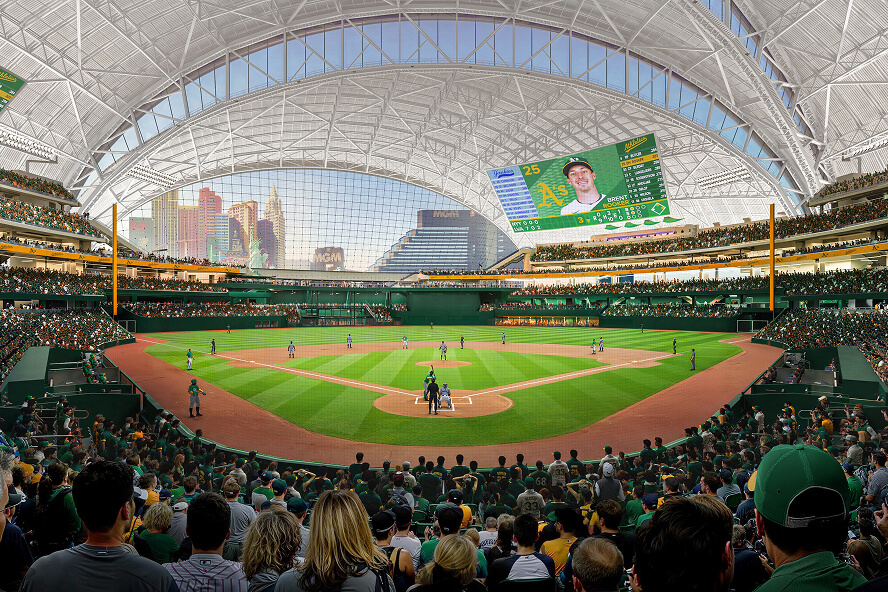
The new A’s ballpark is coming soon to Las Vegas. Click here to visit their official site.
Mixed-Use Is Becoming the Default Development Format
If there’s one trend defining new Las Vegas construction in 2026, it’s the rise of mixed-use. Across the valley, the most active projects are blending retail, restaurant, residential, and service uses into single developments and the market is telling us exactly why.
The Chinatown corridor along Spring Mountain Road, long a local favorite, is seeing a concentrated burst of new activity. One approved development calls for a three-story, approximately 116,000-square-foot complex with retail, restaurant, and entertainment space. Nearby, a 380-unit apartment complex with more than 30,000 square feet of ground-floor commercial space is expected to break ground this year. A separate retail plaza along the north side of Spring Mountain at Wynn Road rounds out the picture.
In North Las Vegas, Agora Realty & Management is redeveloping the former Texas Station and Fiesta Rancho sites into Hylo Park, a large mixed-use project whose first phase includes a 90,000-square-foot retail plaza anchored by a Cardenas grocery store. The first businesses are expected to open in 2026. Also in North Las Vegas, local developer Henry Moradi has broken ground on 215 Losee Village, a $40 million commercial complex near the 215 Beltway that will include restaurant space, a car wash, gas station, dental office, self-storage, and a hotel tower in its second phase.
The takeaway for existing property owners: mixed-use isn’t a passing trend it’s the format the market is gravitating toward because it creates more resilient income streams and serves more tenant needs in a single location. That has implications for how your existing assets compete.
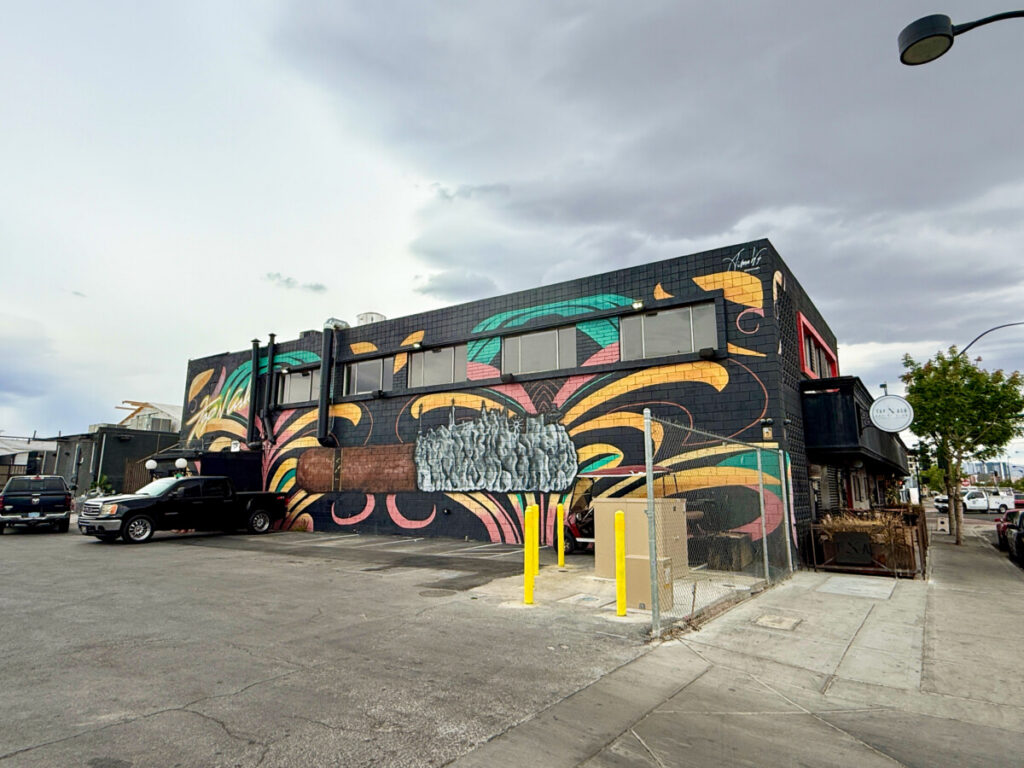
1604 S Commerce is an office space available for lease in and upcoming area in the Las Vegas Arts District.
Industrial Remains the Quiet Powerhouse of Las Vegas CRE
While mixed-use makes the headlines, industrial is quietly putting up the strongest numbers of any asset class in the valley.
According to Colliers’ Q4 2025 Las Vegas Industrial Market Report, the market recorded 5.1 million square feet of net absorption in 2025, with vacancy declining to 9.2% by year-end. Weighted average asking rents held at $1.07 per square foot NNN and Newmark’s Q1 2026 report shows the market continuing to tighten, with 1.5 million square feet in Q1 net absorption gains absorbing new supply nearly as fast as it comes online.
What’s driving this? Southern Nevada’s sustained population growth, its position as a regional logistics hub for the Southwest, and an ongoing diversification of the local economy beyond gaming and hospitality. Distribution, e-commerce fulfillment, light manufacturing, and tech-adjacent uses are all finding Las Vegas an attractive home and developers are responding.
For investors with industrial exposure, the fundamentals remain compelling. For those watching from the sidelines, the question to ask is: are there repositioning opportunities in your portfolio that could capture some of this demand?
Retail Is Tightening and New Supply Is Being Absorbed Quickly
Here’s something you might not expect in a market seeing new retail construction: retail vacancy across the Las Vegas Valley sits at 5.8 percent with nearly 1 million square feet currently under construction, according to Crexi’s market data. That’s a tight market and it means the new product coming online isn’t flooding the market. It’s filling genuine gaps in tenant demand.
A broader national trend is reshaping what that new retail looks like. The average retail lease size has fallen below 3,500 square feet for the first time on record, as tenants across all categories are prioritizing efficient, high-visibility footprints over large-format spaces. The days of big-box anchors as the cornerstone of a retail center’s leasing strategy are largely behind us.
What’s winning in Las Vegas retail right now: experiential concepts, food and beverage anchors, fitness and wellness, medical-adjacent services, and community-oriented programming. The projects getting built in 2026, mixed-use centers, neighborhood retail plazas, lifestyle developments reflect exactly this shift.
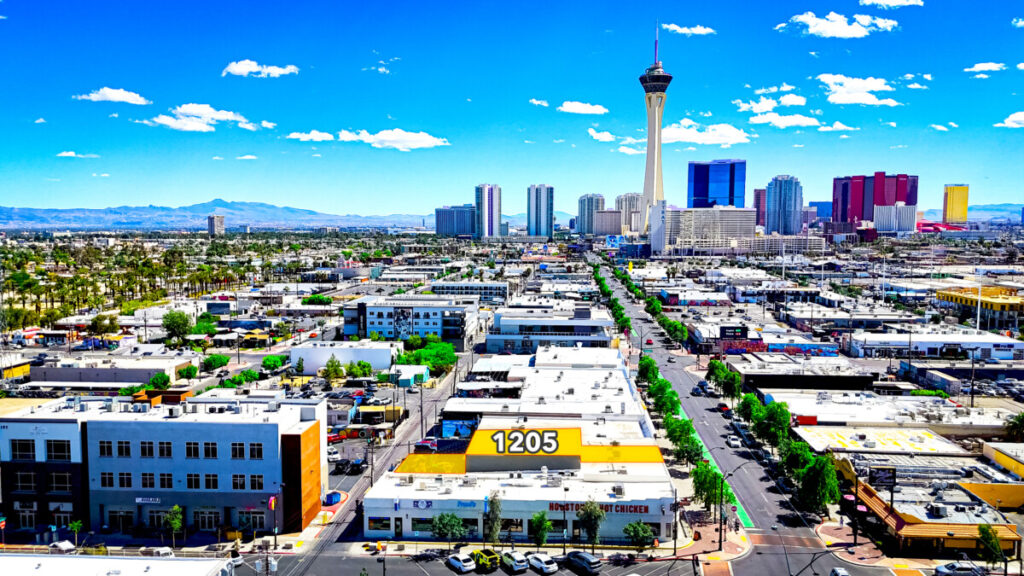
1205 S Main St is a retail space for lease, perfect for a new restaurant or bar concept in Downtown Las Vegas.
What New Development Means for Existing Property Owners
New construction isn’t always a threat. In fact, in a market with strong fundamentals like Las Vegas, it often validates a submarket and attracts new tenants, businesses, and residents who then have demand for existing space nearby.
But it does raise important questions that every CRE owner should be actively considering right now:
Is new development near your asset a lift or a competitive threat? Projects like Hylo Park and the Chinatown mixed-use developments will attract foot traffic and tenant interest to those corridors. If your property is nearby, that may work in your favor. If a new development is bringing competing inventory to your immediate submarket, it’s time to review your rents, tenant mix, and lease timing.
Are your rents and amenities still competitive? New construction sets the market standard for what tenants expect. Updated finishes, energy efficiency, flexible layouts, and strong visibility are table stakes in new product. If your asset hasn’t seen improvements in several years, now is the time to evaluate where the gap is.
Is this a moment to hold, reposition, or sell? Development activity creates pricing benchmarks that ripple through existing inventory. Cap rates on new stabilized product set reference points that affect how buyers value older assets, sometimes favorably, sometimes not. Understanding where your property sits in that context is critical to making the right strategic move.
The Bottom Line
Las Vegas is building with purpose in 2026. The projects taking shape across the valley, mixed-use developments, industrial expansion, major infrastructure, neighborhood retail, reflect real demand from a growing, diversifying market. That’s fundamentally different from speculative building, and it’s a signal worth taking seriously.
For existing property owners and investors, the most important question isn’t just “what’s being built?” It’s “how does this change the value and positioning of what I already own?”
That’s a conversation worth having now, before the market moves.
If you’d like to talk through how new development activity near your asset could affect your portfolio request a free property analysis or reach out to the Barashy Group team directly.
Contact us today:
The Barashy Group
ofir@barashy.com
(702) 325-9673