As Las Vegas commercial real estate (CRE) heads into 2026, the market is at a turning point. After a year of stabilization, evolving capital dynamics, and shifting tenant demand, Las Vegas CRE presents both compelling opportunities and meaningful risks. At The Barashy Group, we believe 2026 will be defined not just by recovery but by strategic repositioning across industrial, office, retail, and multifamily sectors.
Macroeconomic & Capital Markets Outlook
Interest Rates and Debt Conditions
Lenders and investors are watching closely as the U.S. macro backdrop could bring interest rate stabilization or moderate rate cuts in 2026. Improved debt conditions could unlock refinancing opportunities for commercial real estate assets in Las Vegas, but underwriting will likely remain conservative.
Capital Flows & Investor Sentiment
Equity capital is expected to flow into Las Vegas CRE, especially in industrial real estate and value-add plays. Investors are increasingly attracted to markets offering long-term fundamentals, sustainable growth, and the flexibility to reposition assets. We expect a split between opportunistic investors (targeting high-risk/high-return plays) and core-plus investors (seeking stabilized, cash-flowing properties).
Las Vegas Economic Fundamentals
Diversifying Economy
Las Vegas continues to shift beyond its reliance on gaming and tourism, with growing sectors such as technology, healthcare, and logistics. This diversification strengthens demand for industrial space and mixed-use development.
Population Growth and Migration
Las Vegas continues to draw net in-migration, fueling demand for both multifamily housing and retail. Remote workers, retirees, and young professionals are contributing to demographic tailwinds.
Labor Market Trends
While hospitality remains important, growth in professional services, healthcare, and logistics is helping stabilize employment. These sectors support demand for diverse CRE asset classes.
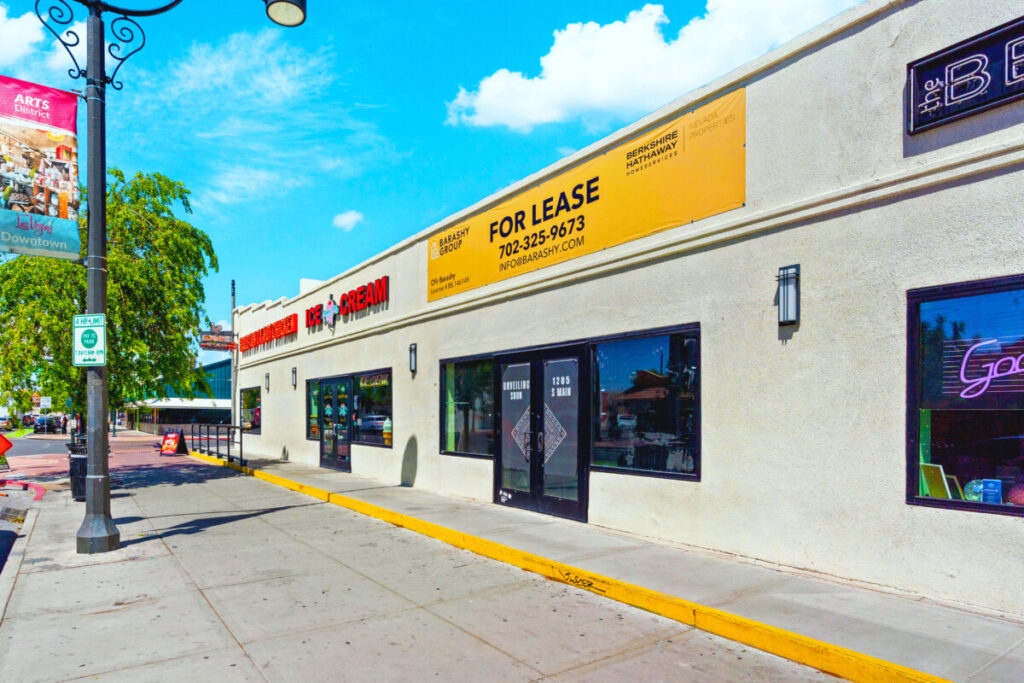
Property Feature: 1205 S Main is a prime retail space in the Arts District in Downtown Las Vegas. It offers a unique opportunity for a new flagship concept in the city.
CRE Sector Outlook for 2026
Industrial / Logistics
- In Q3 2025, Las Vegas posted 1.3 million sq. ft. of positive industrial net absorption, according to CBRE. CBRE
- Colliers reports the vacancy rate rose to 10.1%, largely due to new supply, but asking rents increased to $1.06/sf NNN. Colliers
- 2026 Outlook: Despite elevated vacancy, Las Vegas’s location advantage and rising demand for last-mile logistics make industrial CRE a top play. Investors can look for well-located warehouse or distribution space and potentially pre-lease development.
Office
- The Q3 2025 office vacancy rate dropped to 12.5%, according to CBRE, signaling early signs of market stabilization. CBRE
- However, asking rents remain modest: CBRE reported $2.59/sf FSG in Q3. CBRE
- Per Colliers, positive net absorption is returning, and long-term demand could recover with employment growth. Colliers
- 2026 Outlook: The strongest opportunities will likely be in Class A office and amenity-rich buildings. Older or underperforming offices may convert to mixed-use or residential, especially in submarkets with land and zoning flexibility.
Retail
- According to Colliers, the retail vacancy rate rose to 4.4% in Q3 2025, while weighted asking rent increased to $1.88/sf NNN. Colliers
- New retail space is coming online, including a Costco in the Southwest submarket. Colliers
- 2026 Outlook: Retail space near population centers, mixed-use nodes, or high-traffic corridors will remain attractive. Experiential tenants and neighborhood retail should outperform, especially if consumer spending normalizes.
Multifamily
- Q3 2025 data from Colliers shows multifamily vacancy at 5.4%, down year-over-year. Colliers
- Average monthly rent fell slightly to $1,467/unit. Colliers
- There are 5,723 units currently under construction in Southern Nevada. Colliers
- 2026 Outlook: Expect continued demand, particularly in growth submarkets like North Las Vegas, Summerlin, and Henderson. Investors should consider value-add opportunities, especially for repositioning older assets or targeting underserved neighborhoods.
Land / Development
- In Q3 2025, 42.9 acres of commercial land sold with an average price of $20.92/sf, while 183.1 acres of industrial land sold at $24.71/sf. Colliers
- Development is cautious: retail, medical office, and office projects remain restrained. Colliers
- 2026 Outlook: Limited developable land, especially for commercial and industrial use, could drive infills and redevelopment opportunities. Strategic investors may find value in underutilized parcels or redevelopment into higher-density or mixed-use projects.
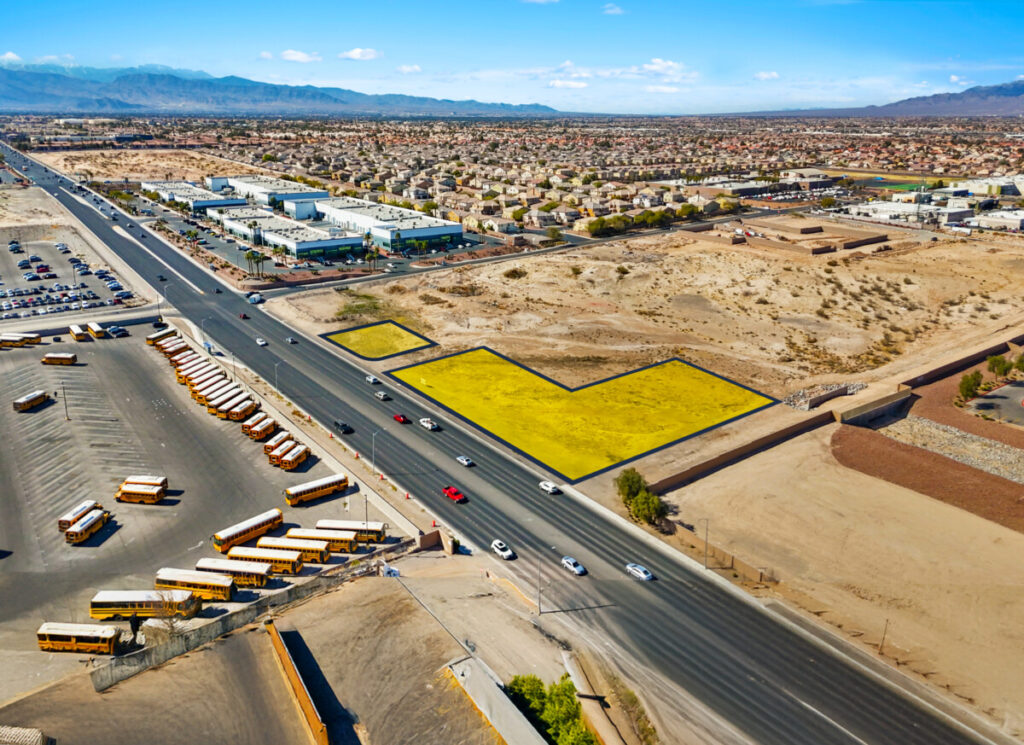
Property Feature: SEC W Cheyenne Ave & Englestad is a unique land opportunity that is well-suited for fleet storage, light industrial operations, automotive uses, or specialty commercial applications.
Risks & Challenges to Watch
- Refinancing Risk: Elevated interest rates may persist, making refinancing difficult and expensive for maturing loans.
- Oversupply Risk: In industrial and multifamily, too much speculative development may pressure vacancy and rents.
- Economic Dependence on Tourism: Las Vegas still leans on the visitor economy, leaving CRE exposed to macro and consumer risk.
- Conversion Risk: Redevelopment of older office or retail properties comes with execution risk (zoning, cost, demand).
- Tenant Risk: Tenant credit risk remains especially relevant for retail and office, particularly in uncertain economic conditions.
Strategic Recommendations for 2026
Investors:
- Lean into value-add and conversion plays (office → mixed use, retail → experiential)
- Focus on long-term hold strategies; underwrite for multiple cycles
- Partner with local operators and CRE advisors to navigate Las Vegas’s unique market
Developers:
- Target infill sites for development or redevelopment
- Use sustainable / ESG design to attract quality tenants and long-term capital
- Build flexible projects that allow for phased densification or repurposing
Property Owners:
- Prepare for refinancing by engaging lenders early
- Modernize older assets to improve tenant retention (amenities, technology, sustainability)
- Explore adaptive reuse: assess conversion potential for office or retail properties
Tenants:
- Negotiate flexible lease terms (renewals, sublease, optional expansion)
- Consider long-term occupancy in high-quality, efficient buildings
- Collaborate with landlords on build-outs or tenant improvements if needed
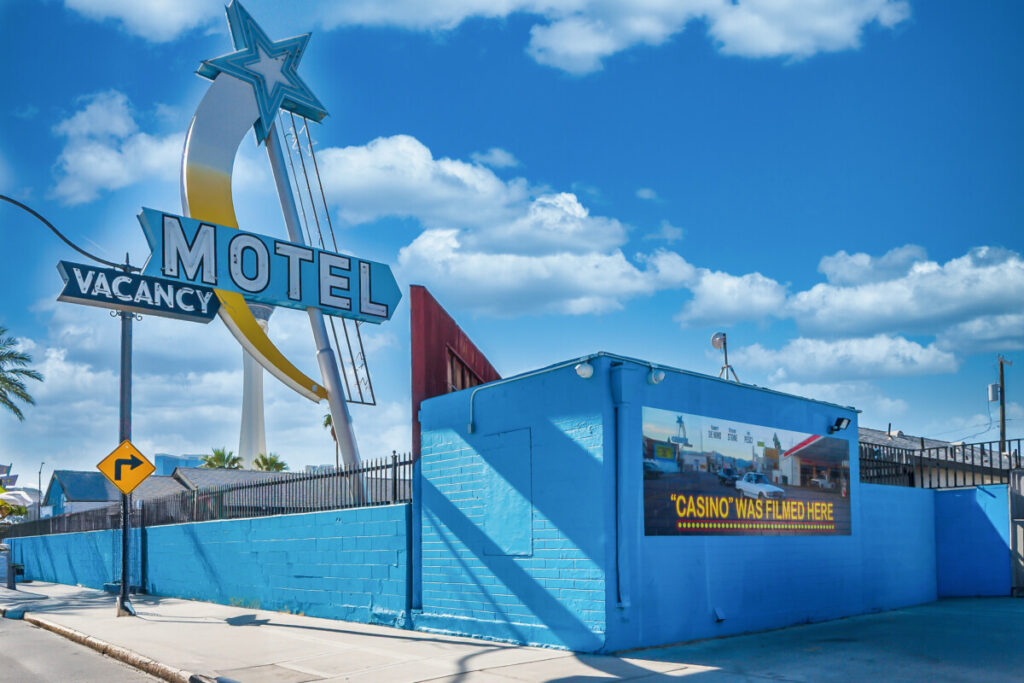
Property Feature: 1414-1418 3rd St, located at the historic Star Motel, seven (7) +250 SF newly renovated suites are available for long-term commercial lease.
Conclusion
The Las Vegas commercial real estate (CRE) outlook for 2026 is characterized by both opportunity and caution. With its diversified economy, migration tailwinds, and shifting capital markets, Las Vegas is well-positioned to support industrial, multifamily, and strategic value-add plays. At the same time, office and retail require more nuanced strategies — particularly around upgrading, conversion, and tenant mix.
At The Barashy Group, we’re ready to help you navigate these trends with comprehensive market insights, creative underwriting, and forward-looking investment strategies. If you’re planning your 2026 CRE strategy — whether to invest, develop, reposition, or refinance — we’d love to talk about how we can partner.
Contact The Barashy Group to schedule a 2026 CRE strategy session today.